

PROMISE
The only agentic AI platform using Promise Theory for reliability, governance, and autonomous decision integrity. Eliminate black-box anxiety.
See the Promise Engine in action.
Your data is secure. No spam guarantees.
A scientific framework designed to make autonomous systems reliable.
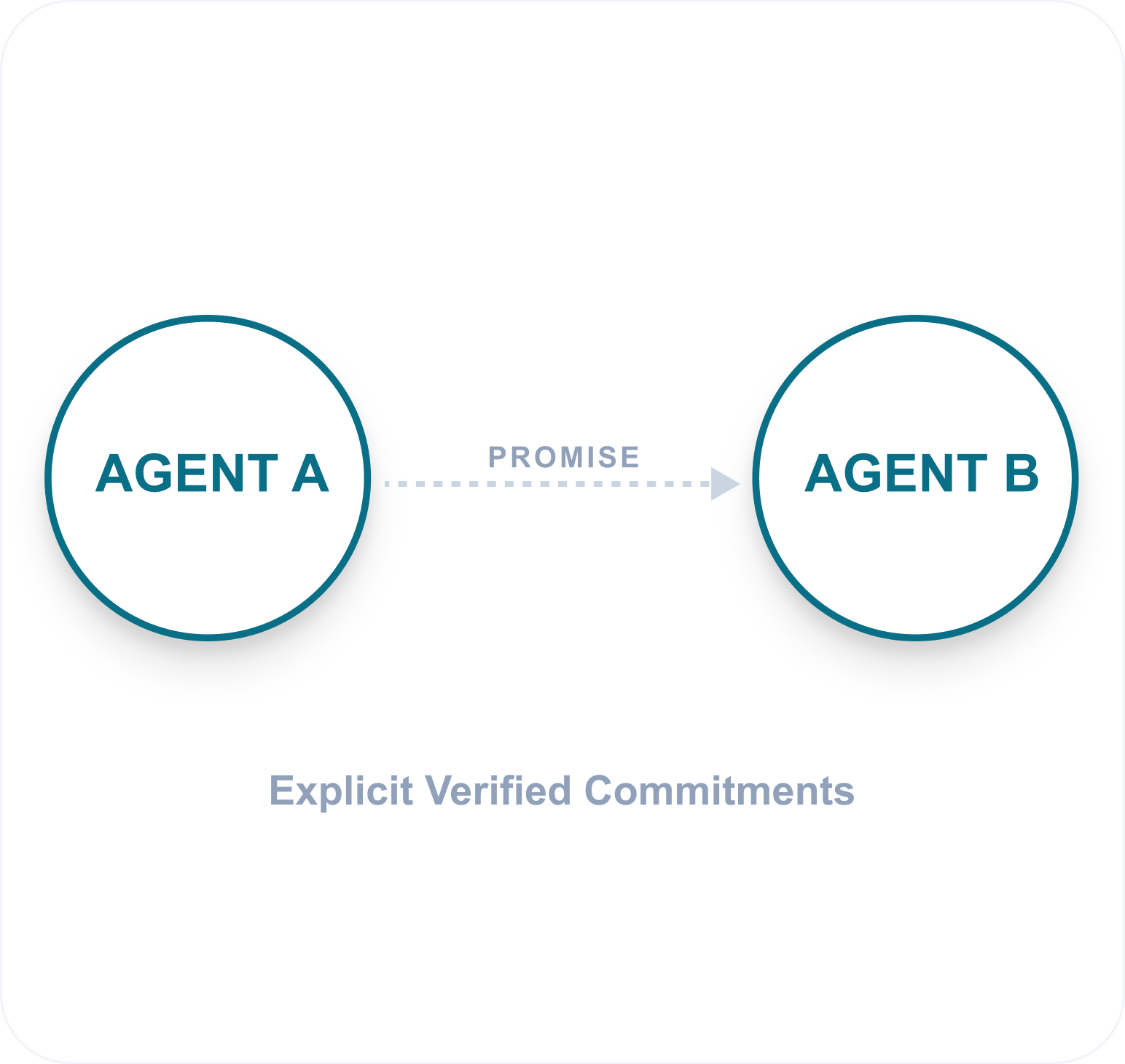
Unlike traditional command-and-control systems where a central brain forces actions, Promise Theory relies on agents operating independently but coordinating through explicit, verifiable commitments. This removes the "single point of failure" risk.
Agents don't just 'try'—they make verifiable promises about outcomes, creating a chain of accountability.
By modeling cooperation as promises, system behavior becomes deterministic rather than probabilistic.
Every decision is measured against the initial promise, allowing for instant drift detection and correction.
We built the AI² Integrity Layer directly on Promise Theory principles. Scout-itAI validates every AI action before it executes, ensuring compliance and safety.
Each agent evaluates variance, reliability, and trust signals before acting. It's not just about doing the task—it's about keeping the promise of safety and accuracy.
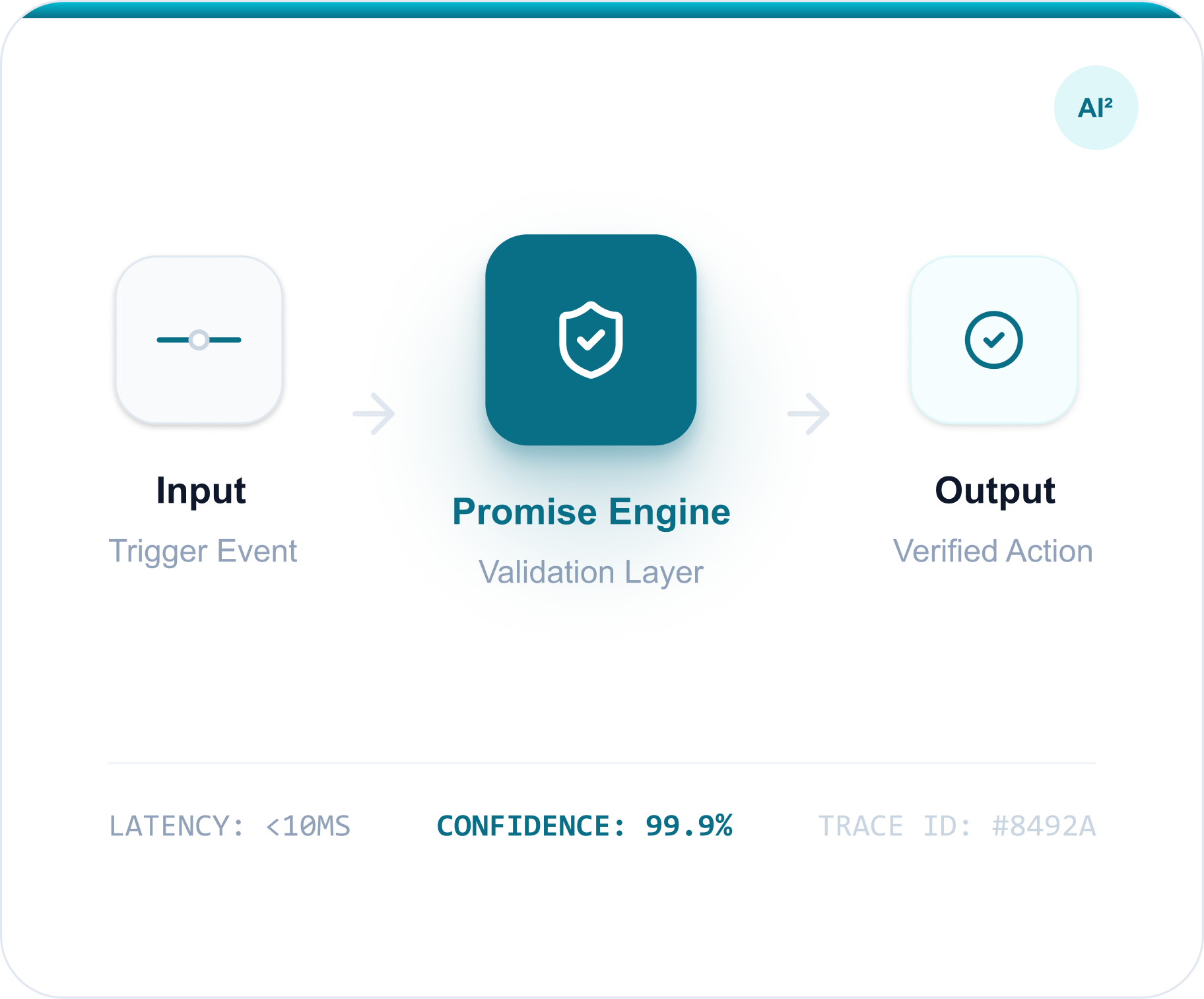
Traditional automation is fragile. Promise Theory provides the resilience needed for trusted AI at scale.
In complex enterprise environments, things break. Promise Theory assumes failure is possible and builds resilience directly into the agent's commitment protocol.
Eliminate the 'black box' problem. Every decision is result of a verified promise, making decision chains transparent and logical.
Stop chasing flaky scripts. Promise-based agents self-correct and only proceed when conditions match their reliability guarantees.
By validating intent before action, Scout-itAI drastically reduces the risk of hallucinated or unauthorized changes to your infrastructure.
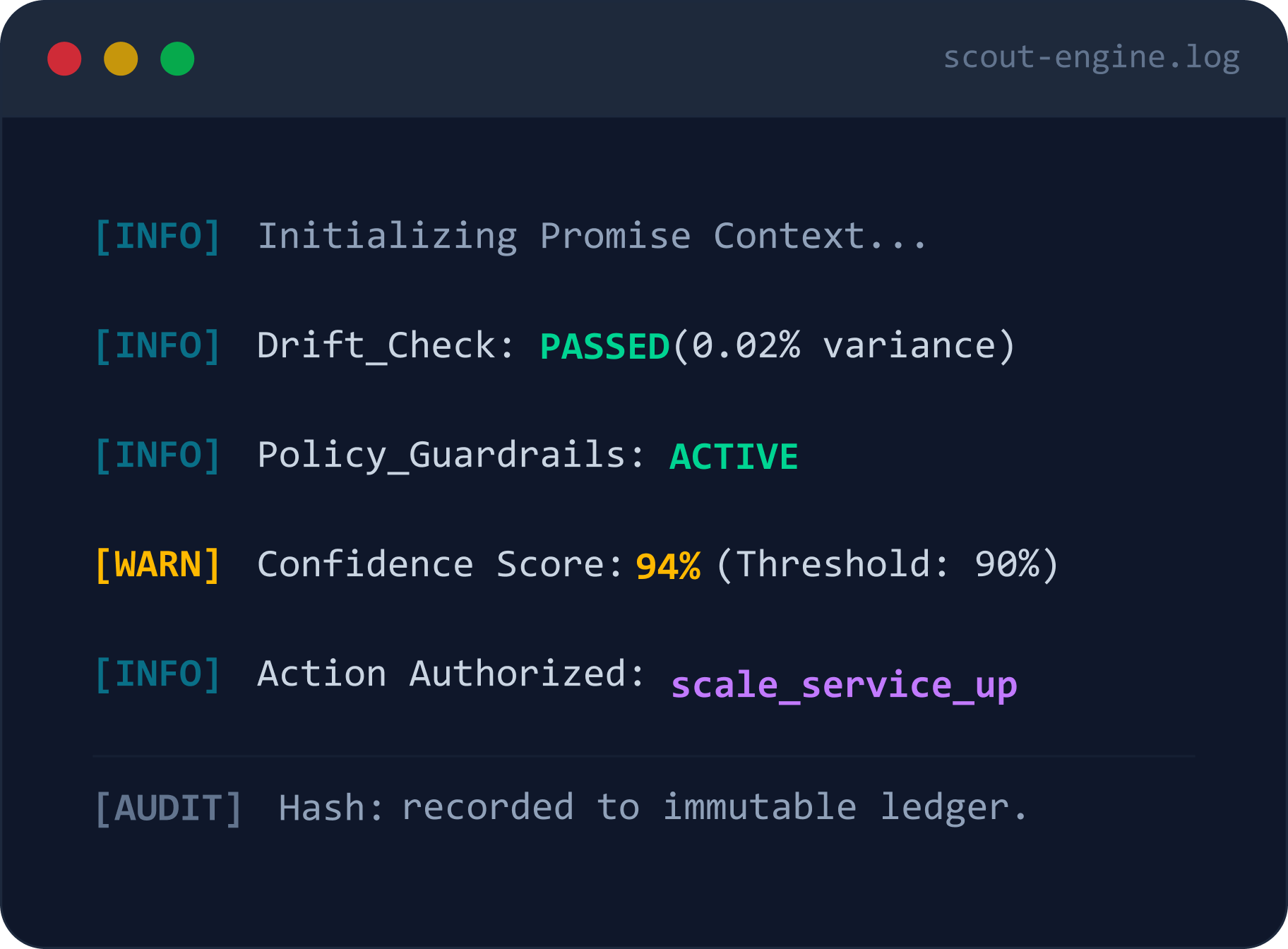
Our governance model isn't an afterthought. It's baked into the core of the Promise Engine, aligning with ISO 42001 AI management standards for total traceability.
Full history of every data point used to make a promise.
Map any outcome back to the specific agent logic and policy version.
Real-time scoring of agent certainty before execution.
Real business value driven by reliable, promise-based architecture.
Prevent cascading failures with autonomous promise enforcement.
Real-time compliance checks reduce delays in critical workflows.
Agents self-diagnose issues using validated causal links.
Eliminate 'black box' problems with verifiable promise chains.
Manage 10,000+ agents with one unified integrity policy.
A coordinated team of specialized AI agents, each bound by Promise Theory to specific operational domains.
Anticipates network load, reliability risks, and performance bottlenecks up to 48 hours in advance. Helps teams prepare before impact occurs.
Identifies slow, subtle configuration drift, dependency mismatch, and reliability erosion across long periods.
Predicts optimal routing paths, ISP instability, and upstream provider issues before they degrade experience.
Correlates logs, metrics, events, and traces from disjointed systems into one unified storyline for fast issue identification.
Analyzes variance, anomaly movement, and KPI drift to detect emerging reliability patterns early.
Acts as the central coordinator and communicator across agents, aligning actions, managing escalation, and translating system signals into clear guidance.
Generates synthetic data and transforms code to enable safe testing, simulation, and modernization without impacting production systems.
Continuously evaluates agent behavior against ISO 42001 governance and calculates AI² trust scores for transparency and accountability.
Stop guessing if your AI is working. Start verifying with Promise Theory. Get a personalized walkthrough of the platform today.
Explore expert-written blogs on IT monitoring, network security, and infrastructure optimization — helping your team stay ahead with the latest insights and strategies.
Last week, I spoke with a VP of IT Operations who summed up his frustration perfectly: “We’ve got seventeen different monitoring dashboards, and somehow we’re still blind when things go wrong.
Read blog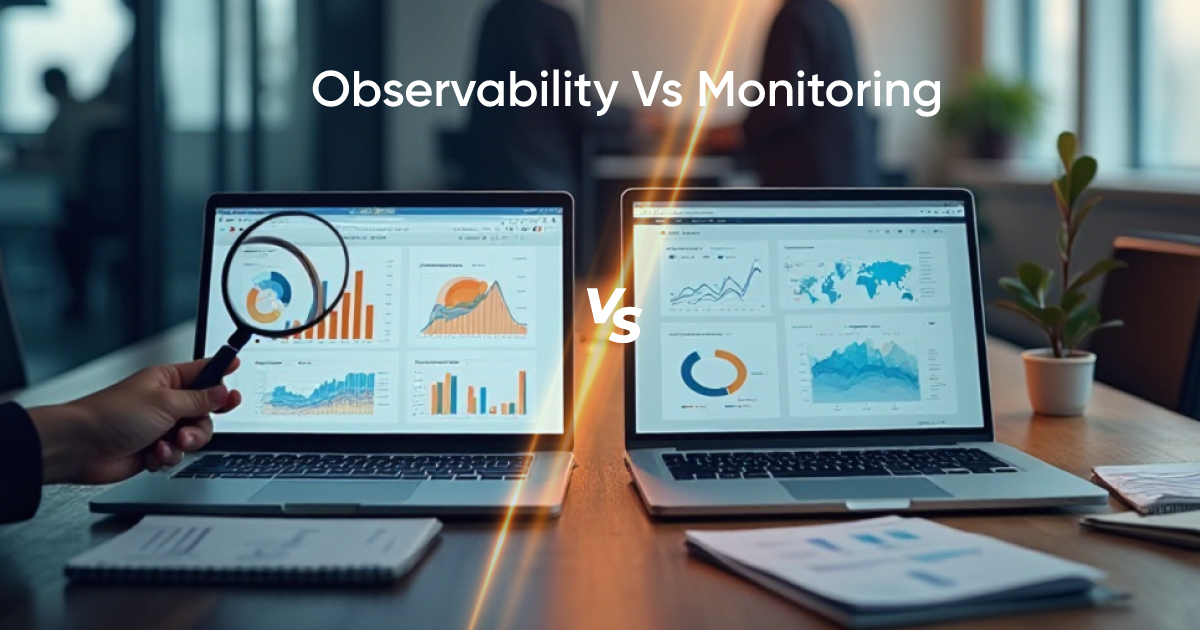
Traditional network monitoring tells you something is wrong. Network observability tells you why it’s wrong, where the issue started, and how far it has spread.
Read blog
Your network is the lifeblood of your business, but outdated tools may be silently working against you. False alarms, blind spots, and slow root-cause investigations aren’t just frustrating; they cost money, customers, and credibility.
Read blog
At 4:03 p.m. on launch day, conversion rates decrease and internal communications increase. Although dashboards appear normal, the 95th percentile (p95) latency rises from 640 ms to 873 ms within 11 minutes. Such scenarios are common in network operations.
Read blog
By 2025, enterprises are no longer asking whether to use cloud computing but how extensively to adopt multi-cloud. Leveraging providers like AWS, Azure, and Google Cloud has become standard, offering flexibility, resilience, and competitiveness.
Read blog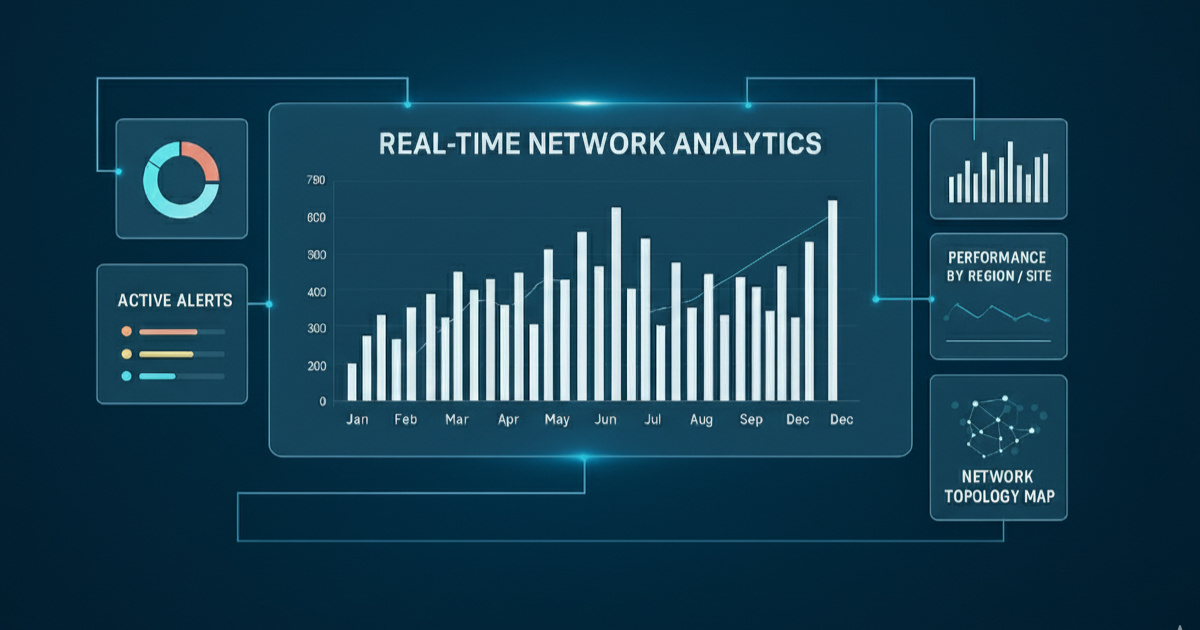
Modern networks don’t sit still. They span hybrid clouds, SD-WAN edges, Wi‑Fi, SaaS, and mission‑critical apps your customers touch every minute. When something blips, users feel it fast. That’s why real-time network analytics has gone from “nice to have” to must-have for IT managers and CTOs.
Read blog Simplified Analytics
 Fast Setup
 Instant Savings
 24x7 Support
Stay informed with our latest insights and updates plus industry trends—subscribe to our newsletter today!


2025 ScoutIT AI-US66890549 Patent Pending


 No credit card required